Back to the EU

Following changes beyond my control, I found myself thinking about my dependence, as a European citizen, on services and products made in the USA. This never used to bother me, but lately it has started to worry me. I therefore decided to start moving the services that are most important to my private and professional life to Europe.

It took me about a month to draw up a list of services, actions, and priorities. I started with the list of the most important services, but the more I thought about it, the longer the list grew: internet domains, email accounts, cloud storage. These were just the beginning.

This service was a great help: https://european-alternatives.eu/

I used to use GoDaddy to manage my internet domains, but I chose OVH as a European replacement and I must say that the migration was fairly painless.

The step that scared me the most was email: my main personal account was Gmail and I am gradually replacing it with my Proton account. I also decided to move my business accounts to Proton. These were previously on Office 365, which obviously offers many other services in addition to email. I didn’t use all of Office 365 services, so I was able to cover my needs with the Proton suite without any compromises: email, calendar, drive. The migration was fairly easy. To replace Microsoft Office, I chose Libre Office. I replaced Outlook with Proton Mail, and I must say that after some initial confusion, now, after about a month, I’m very happy with it.

Last weekend, I reinstalled Debian on almost all my computers and reset my iPhone.

You don’t realize how many services/applications you use until you start throwing stuff away and looking for replacements! I decided to start tidying up my phone, and I must say that I now have far fewer apps.

For now, I’ve decided to continue using iPhone and iCloud. Trying to change smartphones at this point could be fatal. Next year, I plan to buy a Jolla smartphone and maybe try to contribute to the project.

As for the browser, after many years, I decided to abandon Chrome and switch to Brave and DuckDuckGo instead of Google as my search engine.

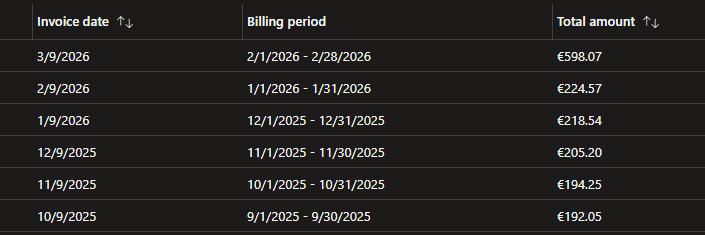
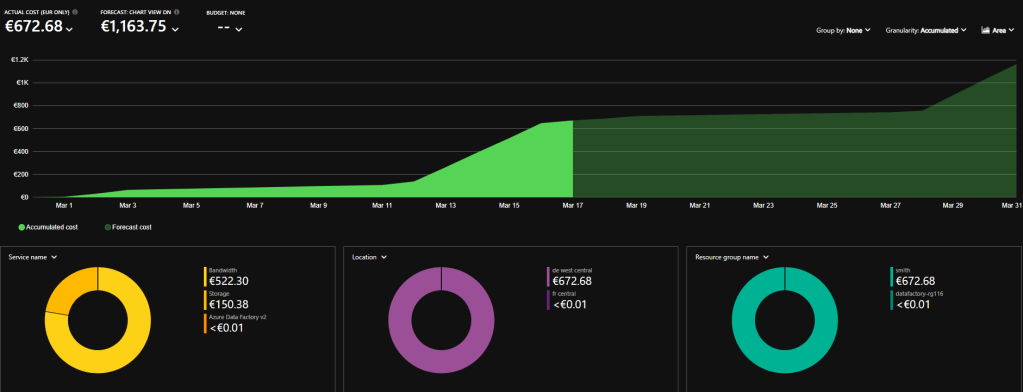
As for work, many of the systems I use are local, and the rest are OVH and Hetzner machines. I have a few TB of storage on Azure with content produced by Matrix, which I’ll move in my spare time to cancel the subscription.

Clearly, this journey does not end here. To date, I have moved a lot of services to Europe and kept some in the US. For now, I wanted to be sure that no one could deactivate my email account without explanation, as happened with my Twitter account πŸ™‚

Do we control the technology we use?

Social networks are a great vehicle for sharing. Each user contributes by sharing their own experiences. Our smartphone has more information about us than our parents or our partner do. This allows us to create relationships and improve existing ones, enabling us to get to know others better.

One of the many drawbacks is that all the data we put on social networks is accumulated by companies that become its owners. These companies have a view of the world that is more comprehensive than anyone has ever had before. Knowing people’s tastes, orientations, thoughts, and moods allows them to be monitored, but above all, it enables them to be solicited, guided, and ultimately led.

This happens with social networks and with the lives of the people who participate in them. I won’t comment on who profits from this; there are journalists who deal with these things on a daily basis and are certainly more reliable than I am.

However, this mechanism does not work well with companies. Of course, by looking at a company’s website, we can see what it does. By looking at LinkedIn, we can understand who works there and possibly what they do and how they do it. It always remains at a high level; from the outside, we can peek in, but not much more. Typically, unless there is a leak, we know what a company wants us to know.

So how could someone from the outside really understand how a company works? How could someone understand the business processes, methodologies, and technologies used in a particular company?

The solution could be to create an assistant based on artificial intelligence!

Once this is done, it is advertised as the future, with speculation that it will allow anyone to do anything, and surely someone will find it convenient to share everything they would not even confide to their mother in a chatbot (about which they know nothing).

Because in exchange for their secrets, the chatbot gives users something they could not otherwise have (except through hard work and perhaps even study): the feeling of being autonomous. Even in contexts unknown to the user. No need to ask, no need for professionals, no need for culture and knowledge. Artificial intelligence does everything. Just pay and share. So you pay twice. Brilliant!

You don’t know how to use Photoshop but you want an image? There’s GenAI! You don’t know how to write code but you want to make an app? Long live Vibe Coding!

In the end, it doesn’t matter that you had to share your secrets with a stranger to get a solution, because the user thinks they did it all themselves in the silence of their office. Them and their computer.

It doesn’t matter where the information ended up because they got an answer in return. They did it all themselves. A kind of masturbation, live on TV.

A doubt about eBay

After weeks of eBay stressing me because I don’t have a payment method associated, I decided to do as they ask and associate a payment method. I thought a credit card would be fine, but no, they want a bank account. I start the procedure: they ask me for the bank I use, a popup from my bank opens asking me for credentials, I enter them and here, rightly, the bank asks me to agree to provide authorizations to eBay. Here I notice two things that I don’t understand: first, the authorizations that eBay is asking me to grant are related, not only to the checking account, but also to a credit card. In addition to this, which already seems excessive to me, the list of authorizations includes: coordinates, balance and list of transactions.

I could also find a justification for these requests, but more easily I see a desire to mind my own business.

Being a hacker

Nothing annoys me more than hearing the term “hacker” used as a synonym for “criminal”. I can actually accept it from people who do something else in life. It really bothers me when this abuse comes from people who say they are cyber security professionals.

I understand that in recent years everyone has become cyber security experts. Those who were previously blockchain experts, before big data experts and even before one of the many trends that have plagued IT. In many cases, the place of many of these would have been a nice industrial fryer for chips in a fast food restaurant.

“I know that I know nothing”, having quoted Socrates, I can admit that I am not the right person to explain what a hacker is, so I report the Manifesto.

If you don’t work in IT and you don’t know it, it’s not serious.
If you work in IT and you don’t know it, it’s serious.
If you work in cyber security and you don’t know it, for me mayonnaise and ketchup πŸ˜‰

Being a hacker means facing life with passion and living the passion without limits. This does not mean harming others. For this reason a hacker is not a criminal. He can be if he harms others, but in doing so he becomes a criminal and must be considered as such.

Another thing: let’s be serious, “ethical hacker” is funny, it smacks of an elderly “script kiddie”!

I deactivated my Facebook account

After many years as a Facebook user yesterday I deactivated my Facebook account. I also deleted my Instagram, but in fact I never used it. The people at Twitter had blocked my Twitter account, so now if you want to talk to me you have to send me an email or call me on the phone πŸ™‚

I know it’s not a big deal, but several friends have been asking me why in the last few hours, so I decided to share this why here, where I can write freely.

I’ve always had a fairly active social life on Facebook, I liked sharing what I was doing and participating in what my friends were sharing. But my passion for social media passed when I realized that social media has become mainly a tool for revenge. Whoever has to say something stupid says it on social media. The real environment in which we live protects and regulates us, no one can say too much bullshit without being reprimanded. Social media, on the other hand, has become the megaphone of morons in too many cases.

Last month I tried deleting the app from my smartphone. It worked well, the usage time was reduced and it didn’t cost me any effort. Finally I could spend more time on the toilet with Nova Lectio.
The notification mechanism is evil, it needs to be managed, especially for young people who grew up with it and are convinced that it’s normal to always be available to others and, even worse, to a program that tries to sell you stuff or, even worse, to sell you to others.

After what happened in Romania, where a civilized state defended itself from a rigged outcome via social media. After seeing how the American government views Europe (and I am happy to be European). After seeing the support that social media gives to characters that I consider embarrassing for the human species. After all this, I thought it was better to take a step back.

I will continue to use LinkedIn because so far “mom Microsoft” is doing a great job and it seems to me that it continues to be a place where one can be at peace.

I’ve never kissed anyone’s ass, and I certainly won’t do it through someone else.

Finally online!

After months of development and testing, a new, futuristic and indispensable feature has finally gone online! I put a page online to get your public IP πŸ™‚

I know there are millions of them, but all those who know returned the information I needed (my IP) along with a hundred other useless things. This page instead only returns the IP and therefore I can use it from the command line and in scripts πŸ™‚

Using this powerful command you can obtain you ip in the simplest format:
curl https://kakama.eu/eca/myip/

Slack is great if you use it well

I have been using Slack for many years and in many projects I have been able to appreciate its features. It is a very powerful tool that unfortunately has a weak point: the user 😦

Most people I know use it like Whatsapp or Sykpe. Failure to use the β€œthreat” feature turns Slack channels into a complete mess.

Below is the same discussion between me and myself using threads and making a mess. Obviously using threads is better!

For all the people who don’t use threads I have a question: why should we spend money on Slack when Whatsapp is free?

Setup ESPHome

In the previous post we saw how to connect our ESP2282 board via USB to our WSL. In this post we see how to use ESPHome into our WSL. If everything worked we will have the following configuration. As you can see we have the “ttyUSB0” device, this represents our board.

First we install the components missing from the default Python installation of WSL: “pip” and “venv”.

sudo apt update
sudo apt install python3-pip
sudo apt install python3.10-venv

Now let’s create the directories that we will use. The parent directory will be “ESPHome”, under this we will create “env” with the Python venv and “esphome” with the ESPHome repo clone.

mkdir ESPHome
cd ESPHome/
python3 -m venv env
git clone https://github.com/esphome/esphome

Now let’s activate the venv and install the ESPHome dependencies.

source env/bin/activate
cd  esphome
sudo python3 setup.py install

Once this is done we can verify that everything works by trying to invoke “esphome”.

As indicated in the documentation we can start the wizard to try to install our firmware on the board using this command

esphome wizard livingroom.yaml

If everything went well we can install the firmware on the board with the following command

esphome run livingroom.yaml --device /dev/ttyUSB0

The first run will take some time because it need to download all dependencies and libraries. At the end of the download the new firmware will be compiled and installed on the board.

Once the firmware has been installed, the board will be started and it will connect to the WIFI network configured during the wizard and in the output we will find all the information relating to the available WIFI network as well as the information relating to the WIFI network to which the device is connected.

Now that the board is installed and configured to use your WIFI, you can disconnect it from the USB port and power it using a power supply or another computer and connect to the board itself using WIFI, also to carry out a new firmware upload. To do this you can use the previous command omitting the device.

esphome run livingroom.yaml

If you get an error like this after uploading

you can fix it by using these commands to update protobuf

pip uninstall protobuf
pip cache remove protobuf
pip install --no-binary :all: protobuf

If the execution is successful you will get output similar to this.

I hope this article is useful to you. In the next few days I will continue with my experiments and I will try to write something useful for everyone πŸ™‚