
In the last few weeks I have noticed that attacks on Correios are constant. I have studied the matter a bit: it is the Brazilian state company that manages shipments and payments related to them.

The scam is always the same, attackers write to users saying that a shipment is blocked and that a small payment is needed to unblock it. What is interesting about this attack is that the user by entering the CPF (Cadastro de Pessoas Físicas) gets his data displayed on the page and this certainly appears to the user as something reliable.
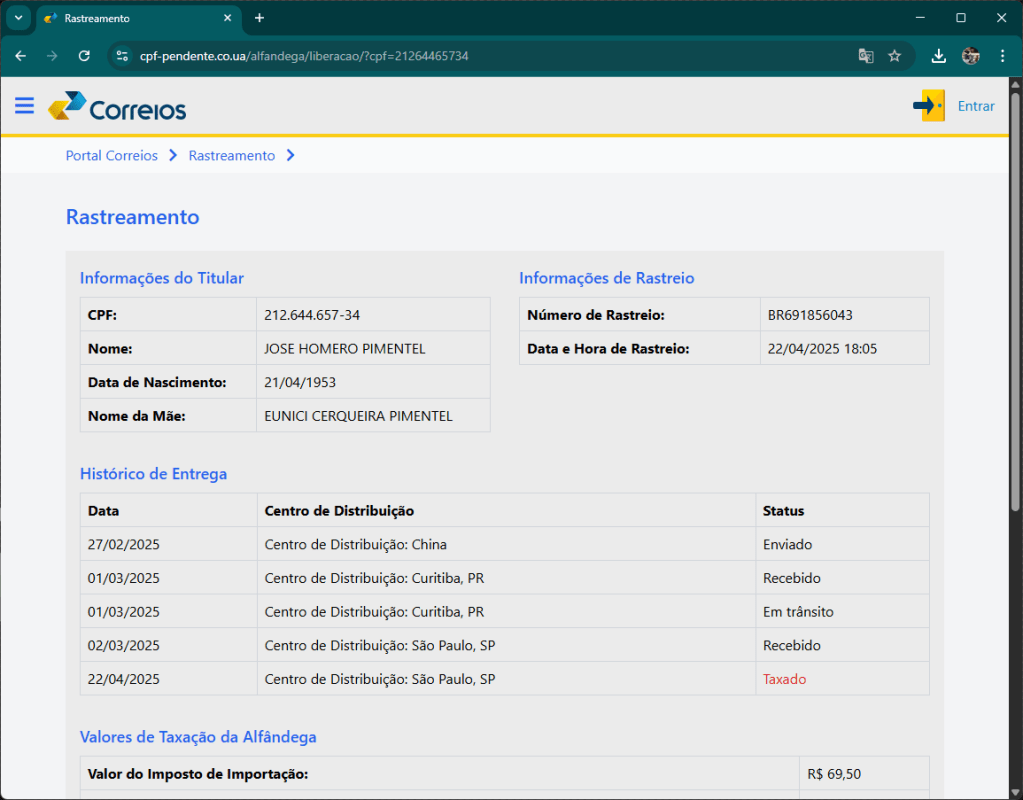
The domain used for the attack is cpf-pendente[.]co[.]ua and it was registered few hours ago.
Domain ID:1161463_COUA-DRS
Domain Name:CPF-PENDENTE.CO.UA
Created On:22-Apr-2025 17:22:07 UTC
Last Updated On:22-Apr-2025 17:25:15 UTC
Expiration Date:22-Apr-2026 17:22:07 UTC
Sponsoring Registrar:NIC.UA LLC (nic-mnt-cunic)
Status:ok
Registrant ID:NICUA2550498EZZN-CUNIC
Registrant Name:<not disclosed>
Registrant Organization:<not disclosed>
Registrant Street1:<not disclosed>
Registrant Street2:<not disclosed>
Registrant Street3:<not disclosed>
Registrant City:<not disclosed>
Registrant State/Province:<not disclosed>
Registrant Postal Code:<not disclosed>
Registrant Country:<not disclosed>
Registrant Phone:<not disclosed>
Registrant Fax:<not disclosed>
Registrant Email:<not disclosed>
Admin ID:NICUA2550498EZZN-CUNIC
Admin Name:<not disclosed>
Admin Organization:<not disclosed>
Admin Street1:<not disclosed>
Admin Street2:<not disclosed>
Admin Street3:<not disclosed>
Admin City:<not disclosed>
Admin State/Province:<not disclosed>
Admin Postal Code:<not disclosed>
Admin Country:<not disclosed>
Admin Phone:<not disclosed>
Admin Fax:<not disclosed>
Admin Email:<not disclosed>
Billing ID:NICUA2550498EZZN-CUNIC
Billing Name:<not disclosed>
Billing Organization:<not disclosed>
Billing Street1:<not disclosed>
Billing Street2:<not disclosed>
Billing Street3:<not disclosed>
Billing City:<not disclosed>
Billing State/Province:<not disclosed>
Billing Postal Code:<not disclosed>
Billing Country:<not disclosed>
Billing Phone:<not disclosed>
Billing Fax:<not disclosed>
Billing Email:<not disclosed>
Tech ID:NICUA2550498EZZN-CUNIC
Tech Name:<not disclosed>
Tech Organization:<not disclosed>
Tech Street1:<not disclosed>
Tech Street2:<not disclosed>
Tech Street3:<not disclosed>
Tech City:<not disclosed>
Tech State/Province:<not disclosed>
Tech Postal Code:<not disclosed>
Tech Country:<not disclosed>
Tech Phone:<not disclosed>
Tech Fax:<not disclosed>
Tech Email:<not disclosed>
Name Server:VERA.NS.CLOUDFLARE.COM
Name Server:LLOYD.NS.CLOUDFLARE.COM

The first curiosity is that the archive is a RAR instead of a ZIP. Someone hoped to make life difficult for Matrix but I love writing code and this allows Matrix to open different types of archives, including obviously RAR 🙂
Aside from the type of archive, my curiosity about this kit was given by the functionality of extracting user data starting from the CPF. I do not know the Brazilian law but that from a simple number you can extract personal data seems unsafe to me.
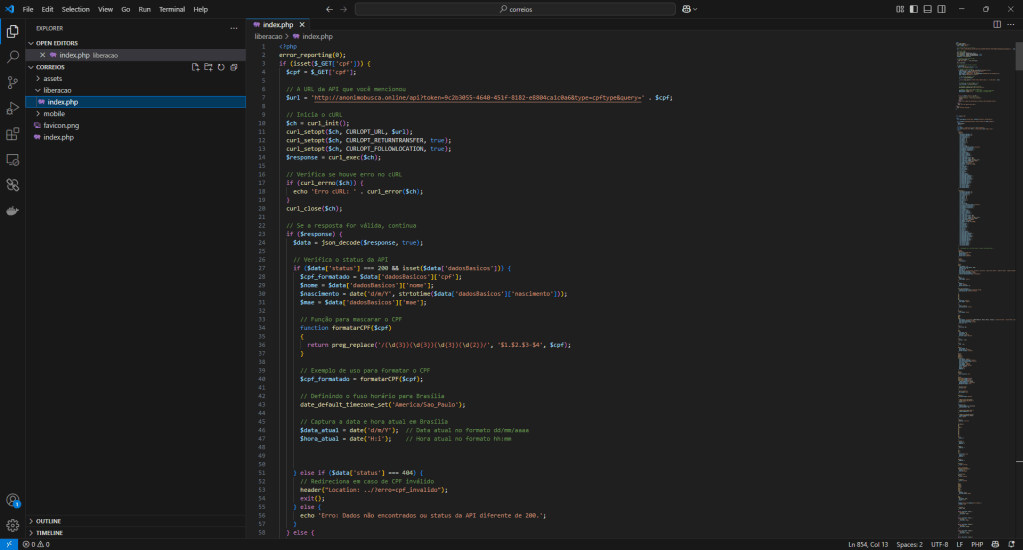
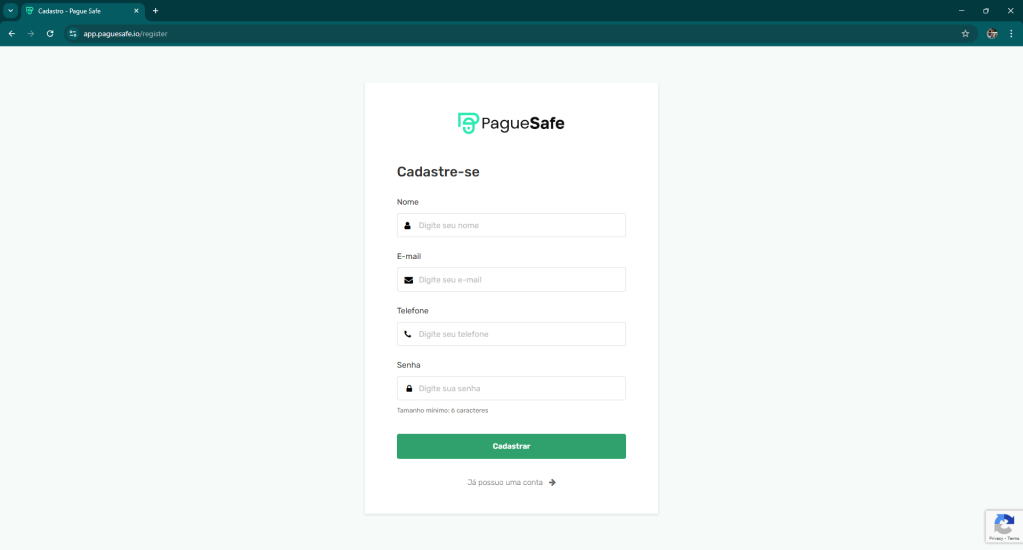
The kit uses an external service to resolve the client data. This service I assume is part of the attack and probably uses another service in turn, perhaps legitimate or a leak from who knows where. This service is available at the domain anonimobusca[.]online. It was registered one week ago.
Domain Name: ANONIMOBUSCA.ONLINE
Registry Domain ID: D544101018-CNIC
Registrar WHOIS Server: whois.namecheap.com
Registrar URL: https://namecheap.com
Updated Date: 2025-04-15T13:27:33.0Z
Creation Date: 2025-04-15T13:27:28.0Z
Registry Expiry Date: 2026-04-15T23:59:59.0Z
Registrar: Namecheap
Registrar IANA ID: 1068
Domain Status: serverTransferProhibited https://icann.org/epp#serverTransferProhibited
Domain Status: clientTransferProhibited https://icann.org/epp#clientTransferProhibited
Registrant Organization: Privacy service provided by Withheld for Privacy ehf
Registrant State/Province: Capital Region
Registrant Country: IS
Registrant Email: Please query the RDDS service of the Registrar of Record identified in this output for information on how to contact the Registrant, Admin, or Tech contact of the queried domain name.
Admin Email: Please query the RDDS service of the Registrar of Record identified in this output for information on how to contact the Registrant, Admin, or Tech contact of the queried domain name.
Tech Email: Please query the RDDS service of the Registrar of Record identified in this output for information on how to contact the Registrant, Admin, or Tech contact of the queried domain name.
Name Server: DAPHNE.NS.CLOUDFLARE.COM
Name Server: IGNAT.NS.CLOUDFLARE.COM
DNSSEC: unsigned
Billing Email: Please query the RDDS service of the Registrar of Record identified in this output for information on how to contact the Registrant, Admin, or Tech contact of the queried domain name.
Registrar Abuse Contact Email: abuse@namecheap.com
Registrar Abuse Contact Phone: +1.9854014545
URL of the ICANN Whois Inaccuracy Complaint Form: https://www.icann.org/wicf/
>>> Last update of WHOIS database: 2025-04-23T07:20:24.0Z <<<

For more information on Whois status codes, please visit https://icann.org/epp

>>> IMPORTANT INFORMATION ABOUT THE DEPLOYMENT OF RDAP: please visit
https://www.centralnicregistry.com/support/information/rdap <<<

The registration data available in this service is limited. Additional
data may be available at https://lookup.icann.org

The Whois and RDAP services are provided by CentralNic, and contain
information pertaining to Internet domain names registered by our
our customers. By using this service you are agreeing (1) not to use any
information presented here for any purpose other than determining
ownership of domain names, (2) not to store or reproduce this data in
any way, (3) not to use any high-volume, automated, electronic processes
to obtain data from this service. Abuse of this service is monitored and
actions in contravention of these terms will result in being permanently
blacklisted. All data is (c) CentralNic Ltd (https://www.centralnicregistry.com)

Access to the Whois and RDAP services is rate limited. For more
information, visit https://registrar-console.centralnicregistry.com/pub/whois_guidance.
To obtain the user information, the phishing kit, uses a specific resource exposed by the second domain
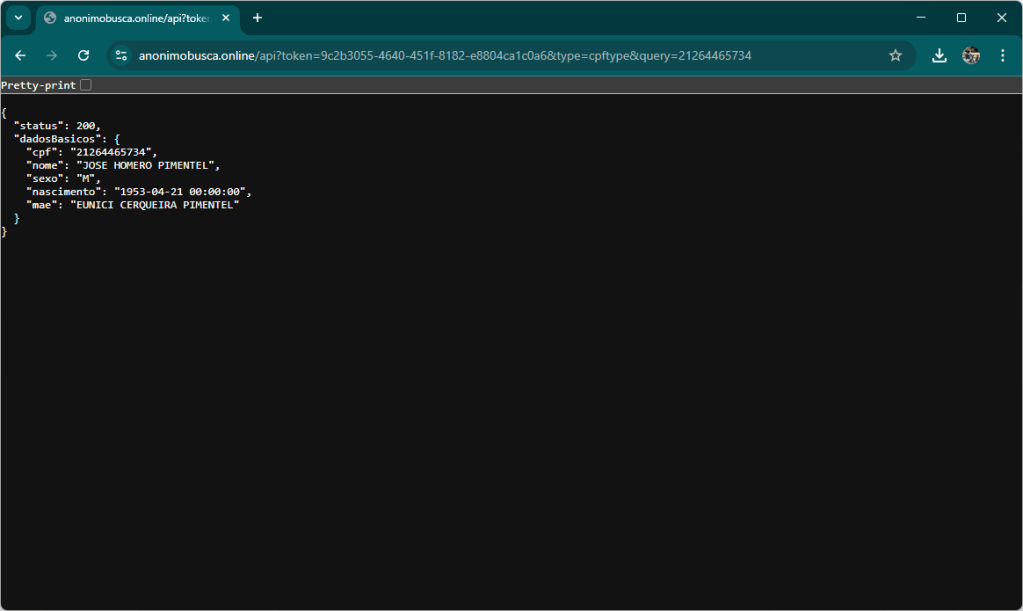
Another aspect is related to how payments are collected. The kit does not in fact collect itself he payment data. The user makes the payment using systems that manage transactions. The services used to perform the transactions are:
- paguesafe[.]com
- atlaspagamentos[.]com
The URLs used are:
- hxxps://checkout[.]paguesafe[.]io/pl/mn7xXvjg2N
- hxxps://checkout[.]atlaspagamentos[.]com/pl/RQ9Kz7XTf8


Both services have been active for a short time, they use cheap providers for domain management and have free certificates. In short, I would say that nothing seems to give trust to these services.
   Domain Name: PAGUESAFE.COM
   Registry Domain ID: 2805917900_DOMAIN_COM-VRSN
   Registrar WHOIS Server: whois.rrpproxy.net
   Registrar URL: http://www.key-systems.net
   Updated Date: 2025-01-22T02:22:32Z
   Creation Date: 2023-08-14T19:17:29Z
   Registry Expiry Date: 2025-08-14T19:17:29Z
   Registrar: Key-Systems GmbH
   Registrar IANA ID: 269
   Registrar Abuse Contact Email: abuse@key-systems.net
   Registrar Abuse Contact Phone: +49.68949396850
   Domain Status: clientTransferProhibited https://icann.org/epp#clientTransferProhibited
   Name Server: NS1.DNS-PARKING.COM
   Name Server: NS2.DNS-PARKING.COM
   DNSSEC: unsigned
   URL of the ICANN Whois Inaccuracy Complaint Form: https://www.icann.org/wicf/
>>> Last update of whois database: 2025-04-23T07:20:37Z <<<

For more information on Whois status codes, please visit https://icann.org/epp

NOTICE: The expiration date displayed in this record is the date the
registrar's sponsorship of the domain name registration in the registry is
currently set to expire. This date does not necessarily reflect the expiration
date of the domain name registrant's agreement with the sponsoring
registrar.  Users may consult the sponsoring registrar's Whois database to
view the registrar's reported date of expiration for this registration.

TERMS OF USE: You are not authorized to access or query our Whois
database through the use of electronic processes that are high-volume and
automated except as reasonably necessary to register domain names or
modify existing registrations; the Data in VeriSign Global Registry
Services' ("VeriSign") Whois database is provided by VeriSign for
information purposes only, and to assist persons in obtaining information
about or related to a domain name registration record. VeriSign does not
guarantee its accuracy. By submitting a Whois query, you agree to abide
by the following terms of use: You agree that you may use this Data only
for lawful purposes and that under no circumstances will you use this Data
to: (1) allow, enable, or otherwise support the transmission of mass
unsolicited, commercial advertising or solicitations via e-mail, telephone,
or facsimile; or (2) enable high volume, automated, electronic processes
that apply to VeriSign (or its computer systems). The compilation,
repackaging, dissemination or other use of this Data is expressly
prohibited without the prior written consent of VeriSign. You agree not to
use electronic processes that are automated and high-volume to access or
query the Whois database except as reasonably necessary to register
domain names or modify existing registrations. VeriSign reserves the right
to restrict your access to the Whois database in its sole discretion to ensure
operational stability.  VeriSign may restrict or terminate your access to the
Whois database for failure to abide by these terms of use. VeriSign
reserves the right to modify these terms at any time.

The Registry database contains ONLY .COM, .NET, .EDU domains and
Registrars.
Domain Name: paguesafe.com
Registry Domain ID: 2805917900_DOMAIN_COM-VRSN
Registrar WHOIS Server: whois.rrpproxy.net
Registrar URL: https://www.hostinger.com/contacts
Updated Date: 2025-01-22T02:22:32Z
Creation Date: 2023-08-14T19:17:29Z
Registrar Registration Expiration Date: 2025-08-14T19:17:29Z
Registrar: Key-Systems GmbH
Registrar IANA ID: 269
Registrar Abuse Contact Email: abusereport@key-systems.net
Registrar Abuse Contact Phone: +49.68949396850
Domain Status: clientTransferProhibited https://icann.org/epp#clientTransferProhibited
Registry Registrant ID: Not Available From Registry
Registrant Name: On behalf of paguesafe.com OWNER
Registrant Organization: c/o whoisproxy.com
Registrant Street: 604 Cameron Street
Registrant City: Alexandria
Registrant State/Province: VA
Registrant Postal Code: 22314
Registrant Country: US
Registrant Phone: +64.48319528
Registrant Phone Ext:
Registrant Fax:
Registrant Fax Ext:
Registrant Email: 20f3221829e93b3a03d0a4bba3bcdb0491e3ed52d42dd6bff0f8d15a0f6fc777@paguesafe.com.whoisproxy.org
Registry Admin ID: Not Available From Registry
Admin Name: On behalf of paguesafe.com ADMIN
Admin Organization: c/o whoisproxy.com
Admin Street: 604 Cameron Street
Admin City: Alexandria
Admin State/Province: VA
Admin Postal Code: 22314
Admin Country: US
Admin Phone: +64.48319528
Admin Phone Ext:
Admin Fax:
Admin Fax Ext:
Admin Email: 20f3221829e93b3a03d0a4bba3bcdb0491e3ed52d42dd6bff0f8d15a0f6fc777@paguesafe.com.whoisproxy.org
Registry Tech ID: Not Available From Registry
Tech Name: On behalf of paguesafe.com TECH
Tech Organization: c/o whoisproxy.com
Tech Street: 604 Cameron Street
Tech City: Alexandria
Tech State/Province: VA
Tech Postal Code: 22314
Tech Country: US
Tech Phone: +64.48319528
Tech Phone Ext:
Tech Fax:
Tech Fax Ext:
Tech Email: 20f3221829e93b3a03d0a4bba3bcdb0491e3ed52d42dd6bff0f8d15a0f6fc777@paguesafe.com.whoisproxy.org
Registry Billing ID: Not Available From Registry
Billing Name: On behalf of paguesafe.com BILLING
Billing Organization: c/o whoisproxy.com
Billing Street: 604 Cameron Street
Billing City: Alexandria
Billing State/Province: VA
Billing Postal Code: 22314
Billing Country: US
Billing Phone: +64.48319528
Billing Phone Ext:
Billing Fax:
Billing Fax Ext:
Billing Email: 20f3221829e93b3a03d0a4bba3bcdb0491e3ed52d42dd6bff0f8d15a0f6fc777@paguesafe.com.whoisproxy.org
Name Server: ns1.dns-parking.com
Name Server: ns2.dns-parking.com
DNSSEC: unsigned
Whoisprivacy: 1
URL of the ICANN WHOIS Data Problem Reporting System: https://wdprs.internic.net/
>>> Last update of WHOIS database: 2025-04-23T07:20:56Z <<<

For more information on Whois status codes, please visit https://www.icann.org/epp

To contact the registered registrant please proceed to:
https://www.domain-contact.org

Please register your domains at; https://www.hostinger.com/contacts
This data is provided by
for information purposes, and to assist persons obtaining information
about or related to domain name registration records.
 does not guarantee its accuracy.
By submitting a WHOIS query, you agree that you will use this data
only for lawful purposes and that, under no circumstances, you will
use this data to
1) allow, enable, or otherwise support the transmission of mass
   unsolicited, commercial advertising or solicitations via E-mail
   (spam) or
2) enable high volume, automated, electronic processes that apply
   to this WHOIS server.
These terms may be changed without prior notice.
By submitting this query, you agree to abide by this policy.
   Domain Name: ATLASPAGAMENTOS.COM
   Registry Domain ID: 2936397696_DOMAIN_COM-VRSN
   Registrar WHOIS Server: whois.godaddy.com
   Registrar URL: http://www.godaddy.com
   Updated Date: 2024-11-26T21:51:12Z
   Creation Date: 2024-11-22T20:48:06Z
   Registry Expiry Date: 2025-11-22T20:48:06Z
   Registrar: GoDaddy.com, LLC
   Registrar IANA ID: 146
   Registrar Abuse Contact Email: abuse@godaddy.com
   Registrar Abuse Contact Phone: 480-624-2505
   Domain Status: clientDeleteProhibited https://icann.org/epp#clientDeleteProhibited
   Domain Status: clientRenewProhibited https://icann.org/epp#clientRenewProhibited
   Domain Status: clientTransferProhibited https://icann.org/epp#clientTransferProhibited
   Domain Status: clientUpdateProhibited https://icann.org/epp#clientUpdateProhibited
   Name Server: ARYA.NS.CLOUDFLARE.COM
   Name Server: BRETT.NS.CLOUDFLARE.COM
   DNSSEC: unsigned
   URL of the ICANN Whois Inaccuracy Complaint Form: https://www.icann.org/wicf/
>>> Last update of whois database: 2025-04-23T07:21:52Z <<<

For more information on Whois status codes, please visit https://icann.org/epp

NOTICE: The expiration date displayed in this record is the date the
registrar's sponsorship of the domain name registration in the registry is
currently set to expire. This date does not necessarily reflect the expiration
date of the domain name registrant's agreement with the sponsoring
registrar.  Users may consult the sponsoring registrar's Whois database to
view the registrar's reported date of expiration for this registration.

TERMS OF USE: You are not authorized to access or query our Whois
database through the use of electronic processes that are high-volume and
automated except as reasonably necessary to register domain names or
modify existing registrations; the Data in VeriSign Global Registry
Services' ("VeriSign") Whois database is provided by VeriSign for
information purposes only, and to assist persons in obtaining information
about or related to a domain name registration record. VeriSign does not
guarantee its accuracy. By submitting a Whois query, you agree to abide
by the following terms of use: You agree that you may use this Data only
for lawful purposes and that under no circumstances will you use this Data
to: (1) allow, enable, or otherwise support the transmission of mass
unsolicited, commercial advertising or solicitations via e-mail, telephone,
or facsimile; or (2) enable high volume, automated, electronic processes
that apply to VeriSign (or its computer systems). The compilation,
repackaging, dissemination or other use of this Data is expressly
prohibited without the prior written consent of VeriSign. You agree not to
use electronic processes that are automated and high-volume to access or
query the Whois database except as reasonably necessary to register
domain names or modify existing registrations. VeriSign reserves the right
to restrict your access to the Whois database in its sole discretion to ensure
operational stability.  VeriSign may restrict or terminate your access to the
Whois database for failure to abide by these terms of use. VeriSign
reserves the right to modify these terms at any time.

The Registry database contains ONLY .COM, .NET, .EDU domains and
Registrars.
Domain Name: atlaspagamentos.com
Registry Domain ID: 2936397696_DOMAIN_COM-VRSN
Registrar WHOIS Server: whois.godaddy.com
Registrar URL: https://www.godaddy.com
Updated Date: 2024-11-22T15:48:06Z
Creation Date: 2024-11-22T15:48:06Z
Registrar Registration Expiration Date: 2025-11-22T15:48:06Z
Registrar: GoDaddy.com, LLC
Registrar IANA ID: 146
Registrar Abuse Contact Email: abuse@godaddy.com
Registrar Abuse Contact Phone: +1.4806242505
Domain Status: clientTransferProhibited https://icann.org/epp#clientTransferProhibited
Domain Status: clientUpdateProhibited https://icann.org/epp#clientUpdateProhibited
Domain Status: clientRenewProhibited https://icann.org/epp#clientRenewProhibited
Domain Status: clientDeleteProhibited https://icann.org/epp#clientDeleteProhibited
Registry Registrant ID: Not Available From Registry
Registrant Name: Registration Private
Registrant Organization: Domains By Proxy, LLC
Registrant Street: DomainsByProxy.com
Registrant Street: 100 S. Mill Ave, Suite 1600
Registrant City: Tempe
Registrant State/Province: Arizona
Registrant Postal Code: 85281
Registrant Country: US
Registrant Phone: +1.4806242599
Registrant Phone Ext:
Registrant Fax:
Registrant Fax Ext:
Registrant Email: https://www.godaddy.com/whois/results.aspx?domain=atlaspagamentos.com&action=contactDomainOwner
Registry Tech ID: Not Available From Registry
Tech Name: Registration Private
Tech Organization: Domains By Proxy, LLC
Tech Street: DomainsByProxy.com
Tech Street: 100 S. Mill Ave, Suite 1600
Tech City: Tempe
Tech State/Province: Arizona
Tech Postal Code: 85281
Tech Country: US
Tech Phone: +1.4806242599
Tech Phone Ext:
Tech Fax:
Tech Fax Ext:
Tech Email: https://www.godaddy.com/whois/results.aspx?domain=atlaspagamentos.com&action=contactDomainOwner
Name Server: ARYA.NS.CLOUDFLARE.COM
Name Server: BRETT.NS.CLOUDFLARE.COM
DNSSEC: unsigned
URL of the ICANN WHOIS Data Problem Reporting System: http://wdprs.internic.net/
>>> Last update of WHOIS database: 2025-04-23T07:22:01Z <<<
For more information on Whois status codes, please visit https://icann.org/epp

TERMS OF USE: The data contained in this registrar's Whois database, while believed by the
registrar to be reliable, is provided "as is" with no guarantee or warranties regarding its
accuracy. This information is provided for the sole purpose of assisting you in obtaining
information about domain name registration records. Any use of this data for any other purpose
is expressly forbidden without the prior written permission of this registrar. By submitting
an inquiry, you agree to these terms and limitations of warranty. In particular, you agree not
to use this data to allow, enable, or otherwise support the dissemination or collection of this
data, in part or in its entirety, for any purpose, such as transmission by e-mail, telephone,
postal mail, facsimile or other means of mass unsolicited, commercial advertising or solicitations
of any kind, including spam. You further agree not to use this data to enable high volume, automated
or robotic electronic processes designed to collect or compile this data for any purpose, including
mining this data for your own personal or commercial purposes. Failure to comply with these terms
may result in termination of access to the Whois database. These terms may be subject to modification
at any time without notice.

**NOTICE** This WHOIS server is being retired. Please use our RDAP service instead.
To this I would like to add that the two graphical interfaces are practically the same.

 Emiliano Carlesi's blog